Short answer
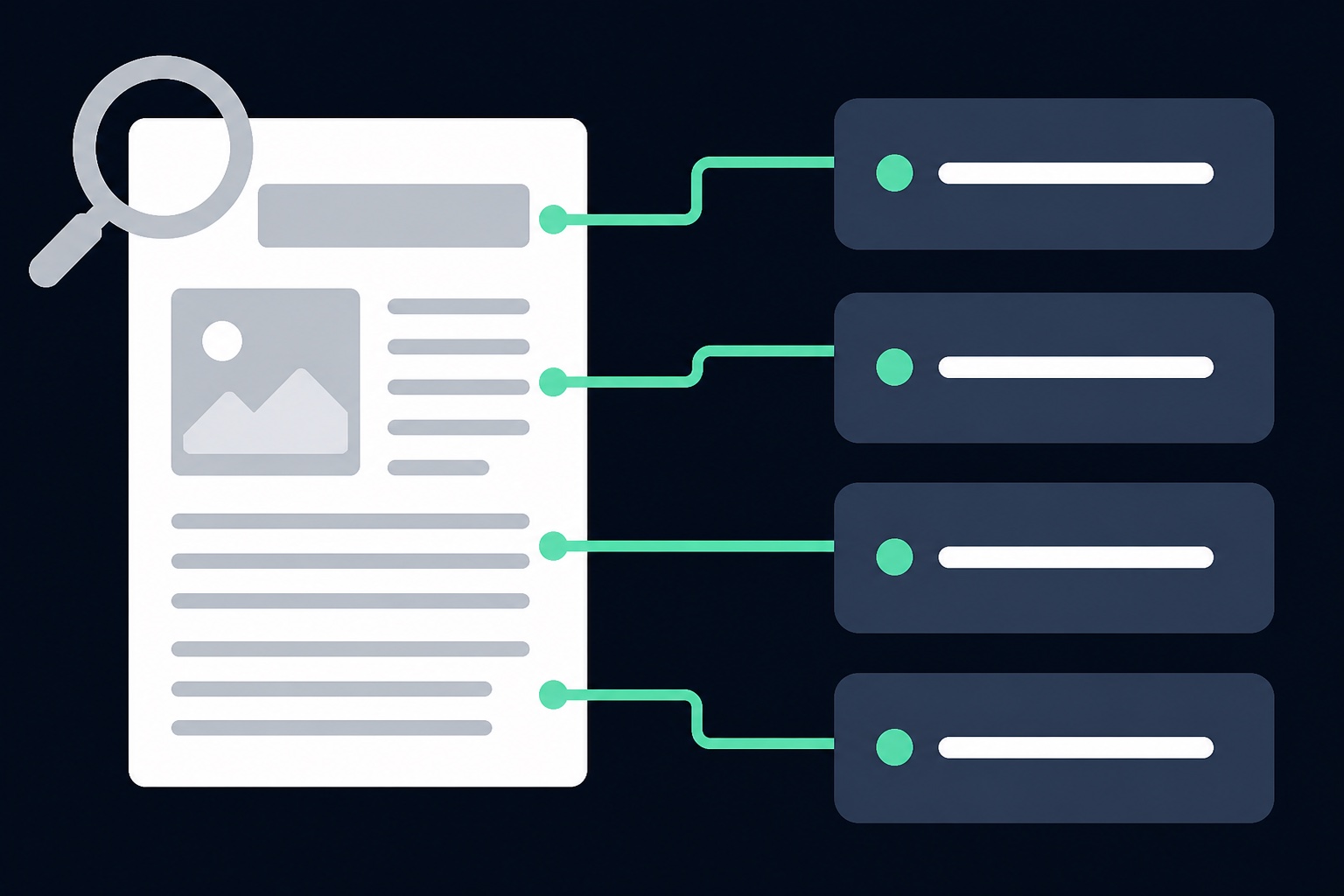
Technical SEO is the work that makes a site reachable, renderable, understandable and fast enough to compete: crawl and index control, URL and architecture decisions, rendering strategy, structured data and Core Web Vitals. It does not create demand — it removes the reasons a search engine would ignore you.
Key takeaways
- Crawl budget is rarely the problem on small sites; index quality usually is.
- Client-side rendering still costs you — if content needs JavaScript to exist, treat that as a risk.
- Site architecture is an SEO decision disguised as a navigation decision.
- Core Web Vitals are a business metric before they are a ranking one.
Ask ten people what technical SEO covers and you will get ten answers, most of them a list of plugin settings. The useful definition is narrower: technical SEO is everything that determines whether a search engine can reach your content, render it, understand it, and justify showing it.
1. Reachability
Before anything else, a crawler has to find the page and be allowed to fetch it. Most damage here is self-inflicted — a stray disallow rule, a noindex that survived a staging deploy, an orphaned page nothing links to.
- Robots.txt should block genuinely private paths, not entire template directories that assets depend on.
- Every indexable page needs at least one internal link from a crawlable page. Sitemaps are a hint, not a substitute.
- Redirect chains cost crawl efficiency and dilute signals. One hop, permanent, done.
- Watch for parameter and faceted URLs quietly generating thousands of near-duplicates.
2. Renderability
Search engines render JavaScript, but rendering is queued, expensive and imperfect. If your primary content, internal links or metadata only exist after hydration, you are betting your visibility on a process you do not control.
The safe pattern in a modern framework is straightforward: render meaningful content on the server, hydrate for interactivity, and keep navigation as real anchor elements rather than click handlers.
// Crawlable and keyboard-accessible
<Link href="/services/technical-seo">Technical SEO</Link>

// Invisible to a crawler, unusable by keyboard
<div onClick={() => router.push("/services/technical-seo")}>Technical SEO</div>
3. Understandability
Once a page is fetched and rendered, the question becomes what it is about and how it relates to everything else. This is where architecture stops being a navigation topic and becomes a ranking one.
- One primary topic per URL. Two pages competing for the same intent split the signal and usually both lose.
- Internal links should describe the destination. 'Learn more' teaches a search engine nothing.
- Heading hierarchy should reflect document structure, not font size preferences.
- Canonical tags resolve duplication; they do not fix a bad information architecture.
- Structured data states relationships explicitly instead of hoping they are inferred.
4. Performance
Core Web Vitals measure loading (LCP), responsiveness (INP) and visual stability (CLS) using real user data. They carry some ranking weight, but the stronger argument is commercial: slow pages lose people who were ready to convert.
- LCP is usually an image, a font or a server response — find which before optimising blindly.
- INP punishes heavy main-thread work. Most sites can cut a third of their JavaScript without losing a feature.
- CLS comes from unsized media, injected banners and late-loading fonts. All three are preventable at build time.
- Lab scores are a debugging tool. Field data is the score that counts.
What technical SEO cannot do
It cannot manufacture demand, and it cannot make thin content valuable. A technically flawless site with nothing worth reading ranks for nothing. The honest framing is that technical work removes ceilings — content, relevance and reputation decide how high you actually go.
Related questions
- How often should a technical audit be repeated?
- A full audit annually, with continuous monitoring in between. Index coverage, Core Web Vitals field data and crawl errors should be watched monthly — most regressions arrive quietly through a routine deploy.
- Does a perfect Lighthouse score guarantee rankings?
- No. Lighthouse is a lab simulation of one page load on a synthetic device. It is useful for finding problems and poor at predicting outcomes. Field data from real users is the meaningful measure.
- Is technical SEO a one-time project?
- The remediation is a project; keeping it true is ongoing. Sites change constantly, and most technical debt in SEO is introduced by normal product work rather than by neglect.
Sources
Want this applied to your business?
We'll look at where you stand today and what the highest-impact next move actually is.